Travel Guide
The Family Safari
Five countries, one life-changing experience — the definitive guide to safari with children
Five countries, one life-changing experience — the definitive guide to safari with children
A safari is the trip that changes a family. I don't say that lightly — I've planned hundreds of holidays, and nothing else comes close. Something happens when a seven-year-old watches a lioness carry her cub across a riverbed at dawn, or when a teenager puts down their phone because a herd of elephants has walked so close to the vehicle that they can hear them breathing. It's not a holiday. It's a before-and-after moment. The children who go on safari come back different — more curious, more connected to the world, more aware that the planet is vast and extraordinary and worth protecting. And the parents come back saying the same thing, every single time: "Why didn't we do this sooner?"
The question I'm asked more than any other: "What age should our children be?" And the answer, honestly, is that it depends on the children and the destination. I've seen six-year-olds sit transfixed through a three-hour game drive, and I've seen ten-year-olds who were bored after twenty minutes. The child matters more than the age. That said, as a general rule, six is the sweet spot for a first safari — old enough to understand what they're seeing, young enough to be completely, unselfconsciously amazed by it.
For families with younger children — four and five — South Africa's private reserves are the answer. They're malaria-free, which eliminates the biggest parental worry, and the best lodges offer dedicated family programmes with shorter game drives, bush walks tailored to small legs, and trackers who know how to turn an afternoon in the bush into an adventure rather than an endurance test. For older children and teenagers, Tanzania and Kenya offer the big spectacle — the Great Migration, the Ngorongoro Crater, the vast open plains of the Masai Mara — and the experience scales up beautifully for families who want something more adventurous.
One thing I always tell families: don't try to do too much. Two or three nights at a single lodge is far better than racing between four camps in ten days. The bush rewards patience. The best sightings happen when you've been sitting quietly in one spot for thirty minutes and suddenly realise there's a leopard in the tree above you. That moment doesn't happen if you're checking out at dawn to catch a light aircraft to your next camp.
Pack binoculars for every member of the family — including the children. It sounds small, but having their own pair transforms the experience for kids. They become active participants rather than passengers. We gift every family a children's wildlife checklist before departure: a laminated card with illustrations of the Big Five, common birds, and tracks. The children use it obsessively, and it becomes a treasured souvenir.
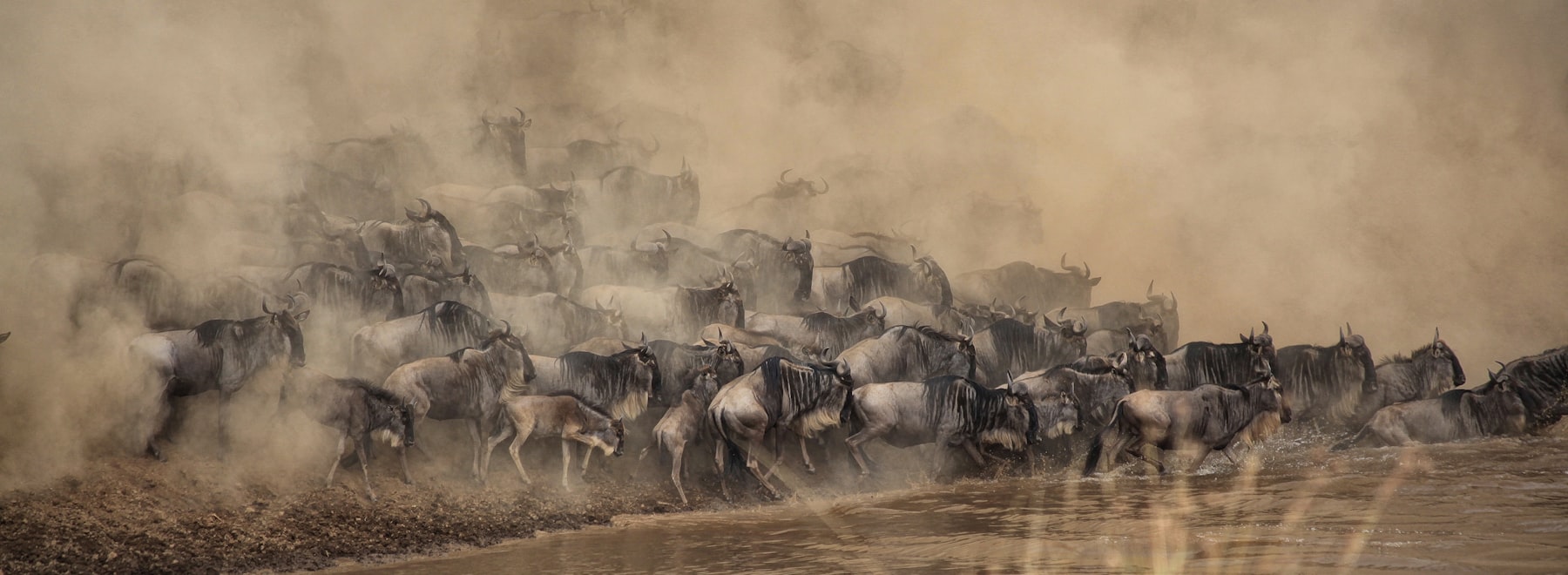
Tanzania is the safari destination that makes grown adults cry. I've seen it happen — a father standing up through the roof of a Land Cruiser watching 200,000 wildebeest thunder across the Serengeti plains, tears streaming down his face, while his daughter tugs his sleeve saying "Dad, are you okay?" He was more than okay. He was having the experience of his life. That's what Tanzania does. It operates on a scale that no photograph, no documentary, no amount of David Attenborough can prepare you for. The Serengeti is bigger than Belgium. The Ngorongoro Crater is a collapsed volcano the size of a small city, with its own weather system and more wildlife per square mile than anywhere on Earth. It is, simply, the greatest wildlife show on the planet.
The Great Migration is the centrepiece — roughly two million wildebeest, zebra and gazelle moving in a continuous loop through the Serengeti ecosystem, following the rains and the fresh grass. The famous river crossings, where thousands of animals plunge into crocodile-filled waters, happen between July and October in the northern Serengeti. But the migration is happening year-round somewhere in the ecosystem, and different seasons offer different spectacles. The calving season in January and February, when half a million calves are born in the southern plains over a three-week period, is extraordinary in a completely different way — new life everywhere, predators on high alert, and a tenderness to the landscape that surprises everyone.
 01
01
1920s explorer-chic in the heart of the Serengeti — Persian rugs on canvas floors, chandeliers under the African sky
Singita is the name that comes up in every serious safari conversation, and Sabora is the camp I send families to first. It sits on a private 350,000-acre concession in the central Serengeti — which means no other vehicles, no queues at sightings, no minibuses. Just your family, your guide, and an unfathomable amount of wildlife. The tents are ridiculous in the best possible way: four-poster beds, claw-foot bathtubs, vintage campaign furniture, and a veranda where you can watch elephants from your morning coffee. The children's programme, Singita Community & Junior Rangers, is the best in East Africa. Guides take the kids on bush walks to identify tracks, teach them to read animal behaviour, and turn every outing into a genuine learning experience. One family told me their son — who had been categorically uninterested in nature before the trip — came home and announced he wanted to be a wildlife biologist. He's now studying zoology at Edinburgh. That's the Singita effect.
For the Ngorongoro Crater — and you absolutely must include the crater — &Beyond Ngorongoro Crater Lodge is theatrically extravagant. Baroque chandeliers, beaded Maasai artwork, floor-to-ceiling windows looking directly into the crater. It shouldn't work, but it does, magnificently. You descend into the crater at dawn, spend the morning driving among lions, hippos, flamingos and black rhino (one of the few places on Earth where you can reliably see all of the Big Five in a single morning), and return for lunch on the terrace with the entire caldera spread out below you. Children are mesmerised by the crater — it feels like driving into a lost world, and the sheer density of animals means there's something extraordinary every few minutes.
We typically build Tanzania itineraries as seven to ten nights: two or three in the Ngorongoro Highlands, three or four in the Serengeti (central or northern, depending on the migration's position), and if the family has the appetite, a final two nights on Zanzibar to decompress on white-sand beaches. The internal flights between camps are part of the adventure — small bush planes that land on grass strips carved into the savanna. Children adore them.
Timing matters enormously in the Serengeti. For the famous river crossings, book July through early October and stay in the northern Serengeti or the Lamai Wedge. For calving season, book late January through mid-February in the southern Serengeti near Ndutu. For the best overall game viewing with the least crowding, June is the sweet spot — the migration is in full swing through the central and western corridors, and the lodges aren't yet at peak-season capacity. We track the migration weekly and adjust recommendations accordingly.
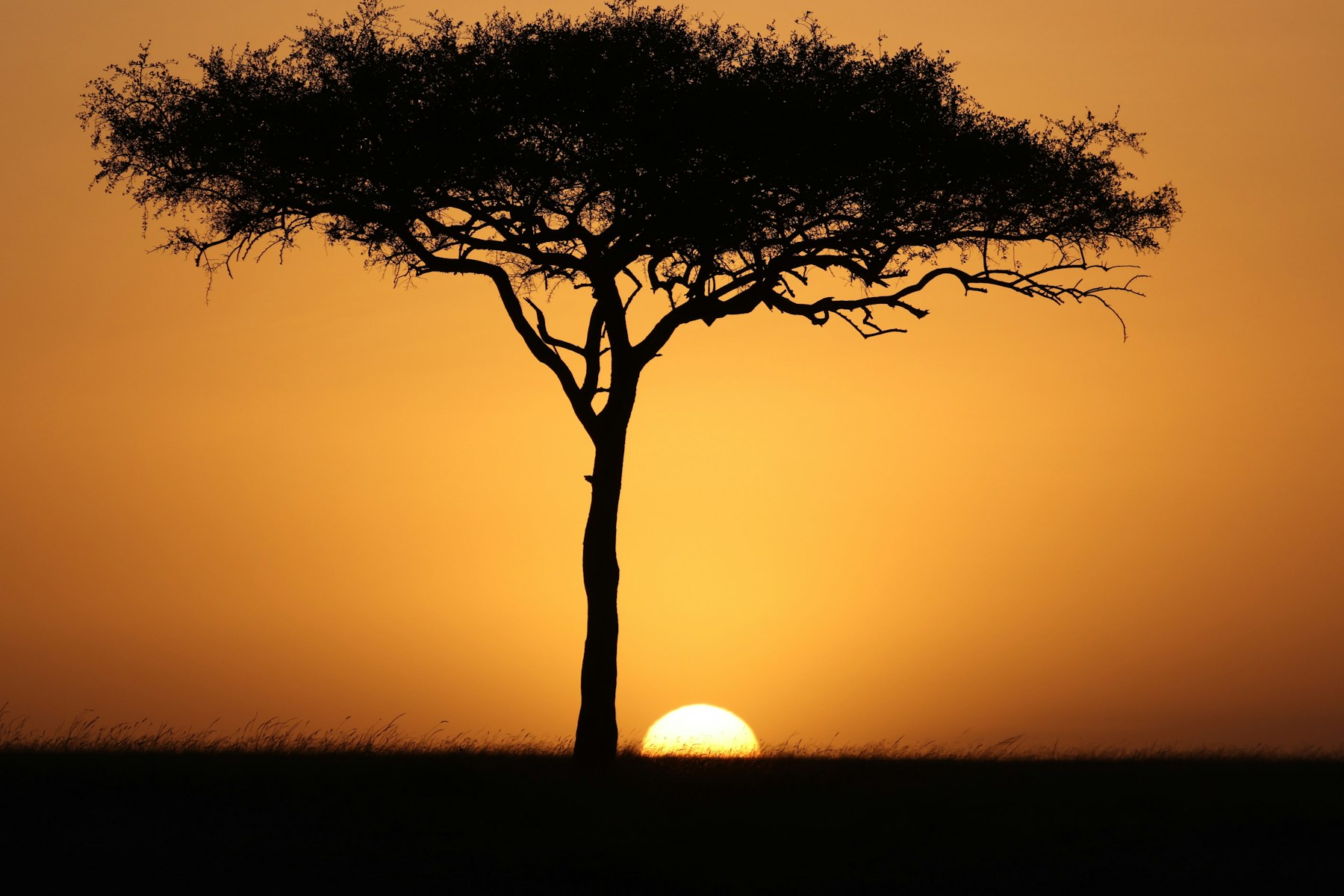
Kenya invented the luxury safari. The Masai Mara has been welcoming visitors since the 1930s, and that heritage shows — the guides here are the most experienced on the continent, the conservancy system is a model for sustainable tourism, and the landscapes have a cinematic grandeur that makes the Serengeti feel almost subtle by comparison. Where Tanzania is vast and sweeping, the Mara is intimate and intense. The valleys are tighter, the river crossings more concentrated, and the big cats — particularly the Mara's famous lion prides and cheetah families — are astonishingly habituated to vehicles. You can sit three metres from a cheetah teaching her cubs to hunt and she won't look up.
The key to Kenya is staying in a private conservancy rather than the National Reserve itself. The conservancies — Olare Motorogi, Mara North, Naboisho — border the reserve but limit the number of vehicles, offer off-road driving and walking safaris, and allow night drives (which the reserve doesn't). The difference in experience is profound. In the reserve, you might share a lion sighting with fifteen vehicles. In a conservancy, it's you and possibly one other. For families, that privacy transforms everything — the children can ask questions, stand up through the roof, make noise, without worrying about disturbing fifty other tourists.
 02
02
Suspended above the Great Rift Valley — the lodge that Out of Africa dreamed about
Angama Mara sits on the exact escarpment where the flying scene in Out of Africa was filmed, and the views are every bit as extraordinary as that suggests. The lodge hangs above the Mara Triangle, and from every tent you look down into the valley where the wildlife moves like brushstrokes on a painting. What makes Angama exceptional for families is the thoughtfulness. The Shamba — a kitchen garden and cooking school — lets children learn to bake bread with the Maasai staff. The beading studio teaches traditional Maasai beadwork. The guides are superb, genuinely patient with children, and they carry field guides, binoculars and reference books that turn every drive into an impromptu classroom. Hot air balloon rides over the Mara at dawn are offered weekly — the minimum age is seven — and I have never, in fifteen years, had a family come back from that experience without describing it as one of the best moments of their lives. The balloon drifts silently over hippo pools and grazing herds, and then you land in the bush for a champagne breakfast. Even the teenagers put their phones away for that one.
The other Kenyan property families love is Cottar's 1920s Safari Camp, also on a private conservancy bordering the Mara. Where Angama is contemporary and design-forward, Cottar's is old-school romance — white canvas tents, leather campaign furniture, silver tea services, and a family heritage that goes back five generations. The Cottar family has been guiding safaris since 1919, and that experience is woven into everything. Children are treated as proper guests, not tolerated appendages. The family tent has interconnecting canvas rooms, a private dining area, and a fire pit where the guides tell stories after dinner. Walking safaris here are exceptional — the children learn to track animals by footprint, identify birdsong, and move through the bush in absolute silence. It's a digital detox disguised as an adventure, and teenagers emerge from it genuinely changed.
For families wanting to combine the Mara with a coastal finish, Alfajiri Villas on the Diani Beach south coast is the most beautiful private villa complex in East Africa. Three villas on a clifftop overlooking the Indian Ocean, each with its own infinity pool and dedicated staff. The snorkelling is world-class — Kisite Marine Park has dolphins, whale sharks and coral gardens — and the contrast between the drama of the bush and the tranquillity of the coast gives the trip a rhythm that families love. We always fly families from the Mara to Diani on a light aircraft — the flight takes about ninety minutes and passes over the Rift Valley, the tea plantations, and Mount Kilimanjaro if the weather is clear.
Kenya's conservancy fees fund the Maasai communities who own the land. When you stay in the Olare Motorogi or Mara North conservancies, a significant portion of your nightly rate goes directly to local families as land lease payments. Explain this to your children — it turns the safari into a lesson in how tourism, done properly, can protect both wildlife and communities. The best guides make this connection naturally, and children grasp it immediately.
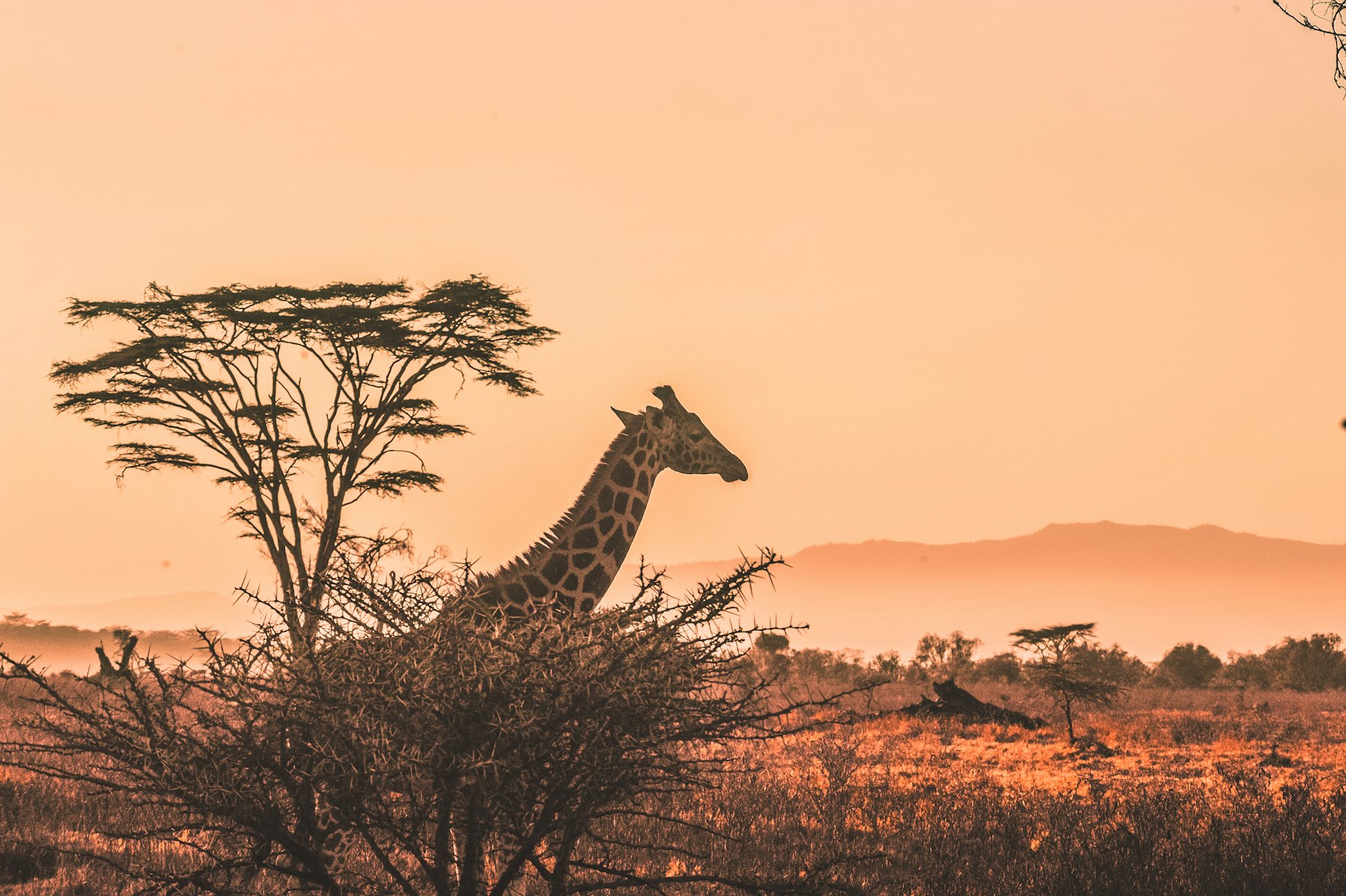
If you've never done a safari and you have children under eight, start here. South Africa's private reserves — particularly those in the Waterberg region north of Johannesburg and the Greater Kruger concessions — are malaria-free, a short flight from Cape Town or Johannesburg, and home to a concentration of wildlife that rivals East Africa. The lodges here pioneered the concept of family safari, and the children's programmes are the most developed on the continent. This isn't a compromise — it's simply the most practical, most child-friendly way to have an extraordinary first safari experience.
The malaria-free point matters more than you might think. It means no prophylactic medication for the children — no bitter tablets, no side effects, no worry. It means no mosquito nets, no DEET, no lying awake wondering if that buzzing near your ear is going to ruin the trip. For parents with children under six, that peace of mind is worth everything. And the wildlife? A family I sent to the Waterberg last Easter saw lion, leopard, elephant, rhino and buffalo in a single morning. They also saw wild dog, which is rarer than leopard and one of the most thrilling sightings in Africa. Their eight-year-old drew a picture of the wild dog pack and it's still on the fridge.
 03
03
Malaria-free Big Five in a dramatic red-rock landscape — the safari for families who want everything without compromise
Marataba sits in the Marakele National Park, and the landscape alone would be worth the trip — rust-red cliffs, sweeping valleys, and ancient rock formations that make the bushveld feel almost otherworldly. But it's the family experience that sets Marataba apart. Children from age four are welcomed on dedicated family game drives with guides who carry colouring books, wildlife cards, and an endless supply of patience and stories. The junior ranger programme teaches children to identify animal tracks in the red sand, build basic shelters, and understand the bush ecosystem. My favourite detail: the guides give each child a "ranger name" on arrival, based on their personality, and use it for the entire stay. One girl was named "Ngala" — brave one — after she spotted a leopard before anyone else in the vehicle. She still uses it as her email name.
 04
04
Five generations of one family's devotion to the land — the most famous leopards in Africa, the most intuitive guiding in the world
Londolozi is not just a lodge — it's a philosophy. The Varty family has been here since the 1920s, and their approach to conservation, community and hosting has influenced every luxury safari operation that followed. The leopard viewing is legendary — Londolozi's resident female leopards are the most relaxed and most photographed in Africa, and seeing a leopard at close range in the golden Sabi Sand light is an experience that recalibrates your understanding of beauty. For families, the Pioneer Camp and Varty Camp both offer family suites with interconnecting rooms, private pools, and guides who are specifically trained to work with children. The Cubs Club (ages 4–11) runs parallel to the regular game drives — children go out with a dedicated guide on shorter routes, learning to track, listening for alarm calls, and building "safari journals" that they illustrate themselves. Every child I've sent to Londolozi has come home with that journal completed, cover to cover.
The classic South African family itinerary combines safari with Cape Town — and for good reason. Three or four nights in the bush followed by three or four nights on the Cape Peninsula gives you an extraordinary range of experiences. Cape Town itself is spectacular: Table Mountain by cable car, the penguin colony at Boulders Beach (children lose their minds), the colourful houses of Bo-Kaap, and some of the best restaurants in the Southern Hemisphere. We always book families at the Ellerman House — a former mansion in Bantry Bay with twelve rooms, a private art gallery, two pools, and views across the Atlantic that make sunset feel like a personal performance. For families who prefer to be in the Winelands, Babylonstoren near Franschhoek is a working farm with extraordinary gardens, a farm-to-table restaurant, and cottage accommodation that children love — they can pick fruit, feed the animals, and run through the eight acres of kitchen garden while the parents taste wine.
South Africa's winter — June through August — is actually the best time for safari. The bush is dry and sparse, making animals easier to spot. Temperatures are warm during the day (mid-twenties) but cold at dawn and dusk, so pack layers. The malaria risk drops to essentially zero in winter in the Waterberg and eastern reserves. And it coincides neatly with UK school summer holidays, which is convenient. For February half-term, the bush is green and lush, the birding is spectacular, and many lodges offer reduced rates.
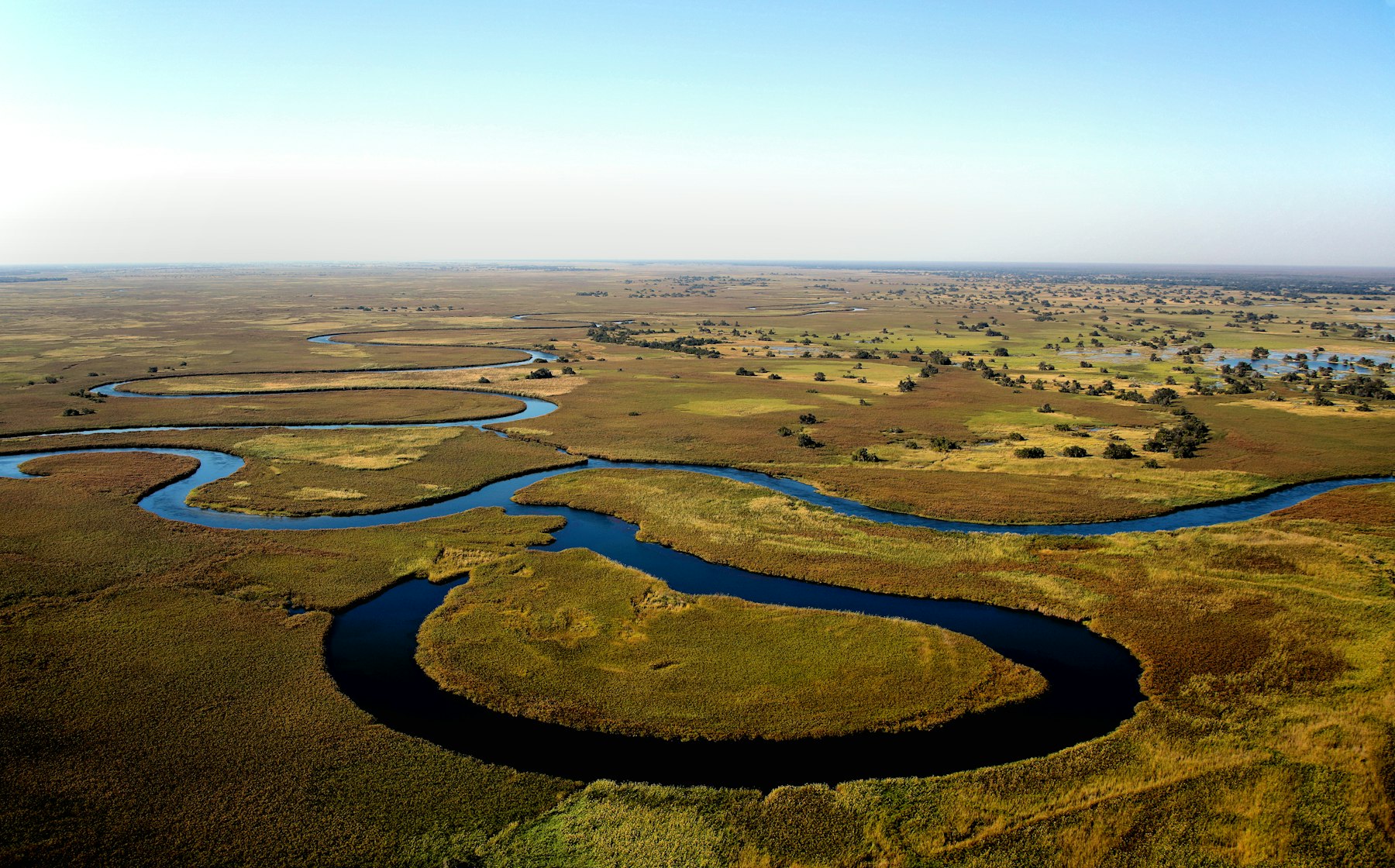
Botswana is for the family that has done a safari before and wants something deeper. It's the purest wilderness experience left in Africa — the government deliberately limits tourism numbers, charges premium park fees, and protects vast areas of pristine habitat. The result is a country where you can drive for an hour without seeing another vehicle, where the camps are tiny (eight tents is considered large), and where the wildlife encounters are startlingly intimate because the animals have never been crowded or harassed.
The Okavango Delta is the centrepiece — an inland delta that floods annually, turning the Kalahari Desert into a labyrinth of waterways, lagoons, and palm-fringed islands teeming with wildlife. Exploring the delta by mokoro (traditional dugout canoe) is one of the most magical experiences in travel. You glide through crystal-clear channels fringed by papyrus, with hippos surfacing beside you and kingfishers darting overhead. Children sit cross-legged at the front of the mokoro while the poler navigates silently through the reeds. The silence is extraordinary — no engine, no road noise, just the dip of the pole and the call of a fish eagle. It's the kind of stillness that modern children almost never experience, and you can see them physically decompress.
 05
05
Tented suites on raised platforms above the delta — private plunge pools, star baths, and mokoro safaris at dawn
Xaranna is the &Beyond camp I recommend for families in the delta, because it strikes the right balance between wilderness immersion and comfort. The tented suites are raised on wooden platforms above the floodplain, each with a private plunge pool and an outdoor "star bath" — a freestanding copper tub where you can bathe under the Milky Way. That detail sounds indulgent, but it's actually the children who love it most — lying in warm water watching shooting stars while frogs chorus in the reeds below is the kind of memory that never fades. Game drives explore the surrounding bush for lion, leopard, buffalo and wild dog, while mokoro excursions take you into the waterways for a completely different perspective. The guides here are exceptional — born in the delta, trained by &Beyond's legendary guide programme, and naturally brilliant with children. They point out things you'd never notice: a chameleon on a branch, a spider web with dew drops catching the light, the difference between a baboon alarm call and an impala alarm call. Every drive becomes a masterclass in paying attention.
For families wanting to combine the delta with a drier, more classic safari landscape, the Linyanti region in northern Botswana is spectacular. The Linyanti marshes and Savuti Channel are famous for large elephant herds — sometimes hundreds at a time, coming to drink at sunset — and the predator density is extraordinary. DumaTau Camp by Wilderness Safaris sits on the banks of the Linyanti and offers some of the most dramatic wildlife viewing in Botswana, combined with the kind of design and service that Wilderness is known for. The new camp, rebuilt in 2023, has family-sized tents with glass-fronted views of the waterhole, where animals come to drink at all hours. Children fall asleep watching elephants by moonlight. You couldn't script a better bedtime.
The classic Botswana family itinerary is eight to ten nights: three in the Okavango Delta (water-based), three in the Linyanti or Chobe area (land-based), and optionally two nights at Victoria Falls on the Zambian or Zimbabwean side. The falls are a spectacle that children never forget — the spray, the thunder, the rainbow that hangs in the mist permanently. We stay at the Royal Livingstone Victoria Falls by Anantara, where zebra and giraffe wander the hotel grounds and the falls are a ten-minute walk from your room.
Botswana is best visited between June and October, when the delta flood is at its peak and the dry season concentrates animals around water. July and August offer the most dramatic combination of floodwaters and wildlife. The camps are small and book out a year ahead for peak season — if you're planning for next summer, enquire now. Botswana is also one of the few safari destinations where the experience genuinely justifies the price. The exclusivity, the guide quality, and the sheer untouched wilderness are unmatched.
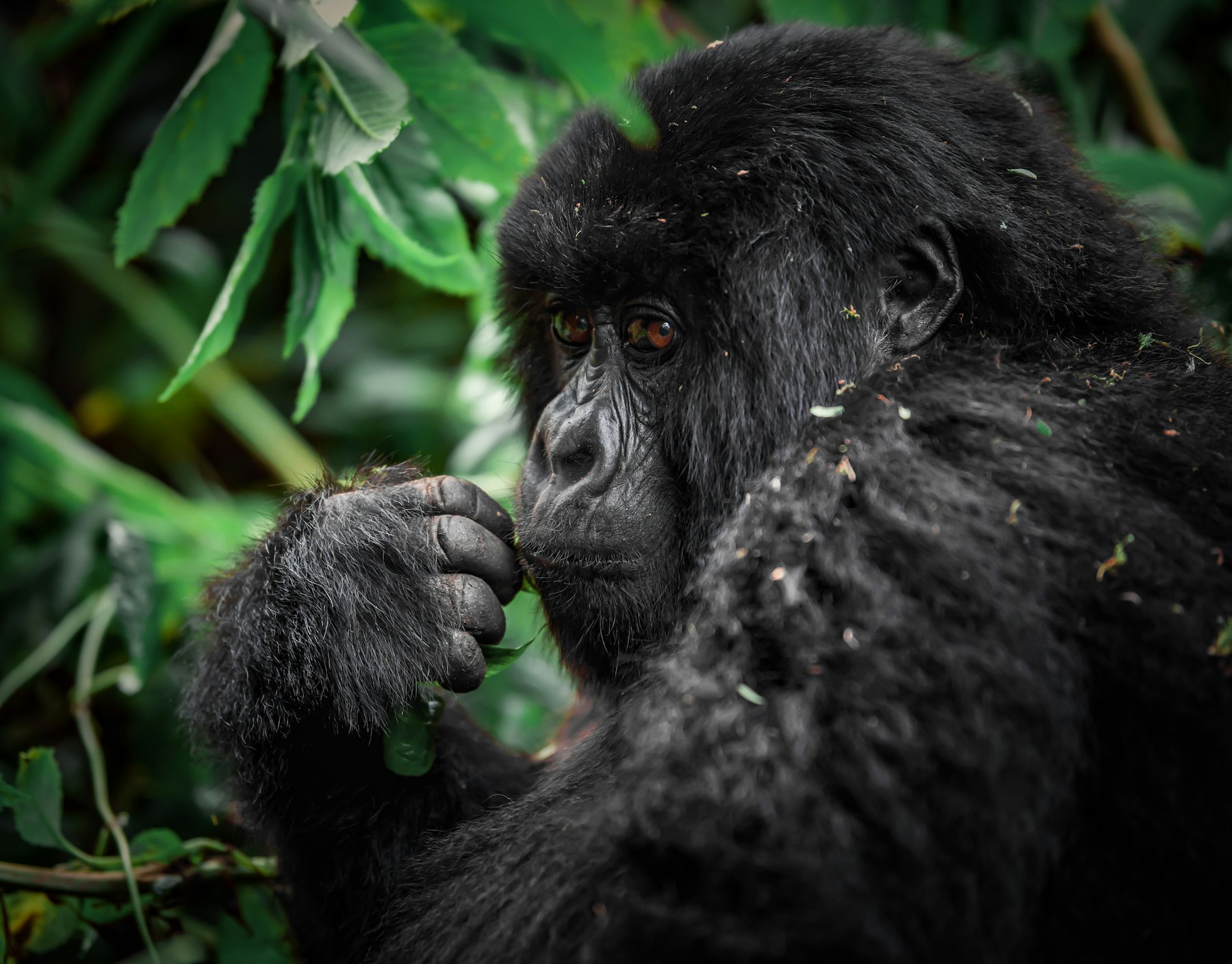
I need to be upfront about something: gorilla trekking is not for young children. The minimum age is fifteen, the hike can be steep and muddy, and it typically takes two to four hours through dense bamboo forest at altitude before you reach a gorilla family. It is also, without question, the single most extraordinary wildlife encounter on Earth. There is nothing — nothing — that prepares you for the moment when you push through a wall of vegetation and find yourself sitting three metres from a 200-kilogram silverback gorilla who looks at you with an intelligence and gentleness that is profoundly, disarmingly human. Every family I've sent to Rwanda has described that hour with the gorillas as the most moving experience of their lives. Parents weep. Teenagers are speechless. It rewrites your understanding of what it means to share this planet with other beings.
Rwanda works beautifully as an add-on to a Kenya or Tanzania safari for families with older teenagers — the typical combination is a week in the Mara or Serengeti followed by two or three nights in Rwanda's Volcanoes National Park. The contrast is extraordinary: from the open savanna to mist-shrouded volcanic peaks, from big cats to great apes, from the drama of the migration to the intimacy of sitting in silence with a gorilla family while a baby swings from a branch above your head and the silverback contentedly munches bamboo behind you.
 06
06
Where luxury meets conservation at the foot of the volcanoes — a lodge built to save the mountain gorilla
Singita Kwitonda is the most beautiful lodge in Central Africa and one of the most important. Built from local volcanic stone and recycled materials, it sits on the edge of Volcanoes National Park with views of the Virunga mountain range. The lodge is named after a silverback gorilla, and the connection to conservation is not decorative — it's structural. Singita has planted over two million trees on the land surrounding the lodge, creating a forest corridor that expands gorilla habitat. When you stay here, you're not just watching gorillas — you're directly funding the programme that protects them. The rooms are extraordinary: volcanic stone walls, floor-to-ceiling windows framing the mountains, heated floors (it gets cold at altitude), and bathtubs positioned so you can soak while looking at the peaks the gorillas call home. The trek departs at dawn from the park headquarters. You return to the lodge mid-afternoon, exhausted and euphoric, and the staff have drawn you a hot bath, lit the fire, and prepared afternoon tea on the terrace. That evening, sitting by the fire with your family, trying to articulate what you just experienced — that's when the trip crystallises into something you'll carry for the rest of your life.
One&Only Gorilla's Nest is the other exceptional option, set slightly lower on the slopes with a warmer, more tropical feel. The forest suites have private terraces and outdoor showers surrounded by banana plants and birdlife. Golden monkeys visit the grounds most mornings — a completely different primate experience that makes a wonderful complement to the gorilla trek. The spa uses local volcanic clay and eucalyptus, and after a day of trekking, it's exactly what tired legs need. We typically suggest two nights at either lodge: one for the gorilla trek, one to recover and do a golden monkey trek or visit the Dian Fossey memorial. Three nights if you want to do a second gorilla permit — and many families do, because one hour never feels like enough.
Rwanda gorilla permits cost $1,500 per person and must be booked well in advance — six months ahead for peak season, three months minimum at other times. There are only eighty permits per day for the entire park, across approximately twenty habituated gorilla families. We have strong relationships with the Rwanda Development Board and can usually secure permits for specific dates, but the earlier you plan, the better your chances of getting the family group you want. The gorilla families have distinct personalities — some are playful and active, others are calmer. We match families to groups based on trekking fitness and what the children (or teenagers) will find most engaging.
It depends on the destination. South Africa's malaria-free private reserves welcome children from age 4 with dedicated programmes. Tanzania and Kenya lodges generally accept children from age 6 or 7. For gorilla trekking in Rwanda, the minimum age is 15. We recommend age 6+ for a first safari — old enough to sit quietly on a game drive but young enough to be completely awestruck.
Absolutely. The lodges we work with have impeccable safety records and are staffed by highly trained guides. Many properties offer dedicated family vehicles, child-friendly game drives with shorter routes, and fenced camps for peace of mind. South Africa's private reserves are malaria-free, which removes the biggest concern for parents of young children.
The dry season (June to October) is generally best for game viewing across East and Southern Africa, as animals congregate around water sources. The Great Migration in the Serengeti and Masai Mara peaks from July to October. South Africa's winter (June–August) offers excellent game viewing with cooler, malaria-reduced conditions. School holidays in February half-term and Easter also work well for Southern Africa.
Every family safari we plan is built from scratch — the right country, the right lodges, the right season for your children's ages and your family's sense of adventure.
Start Planning Your Journey